If you’ve ever experienced sharp chest pain after a fall, workout, or even a bad cough, you’ve probably asked yourself: could this be a broken rib?
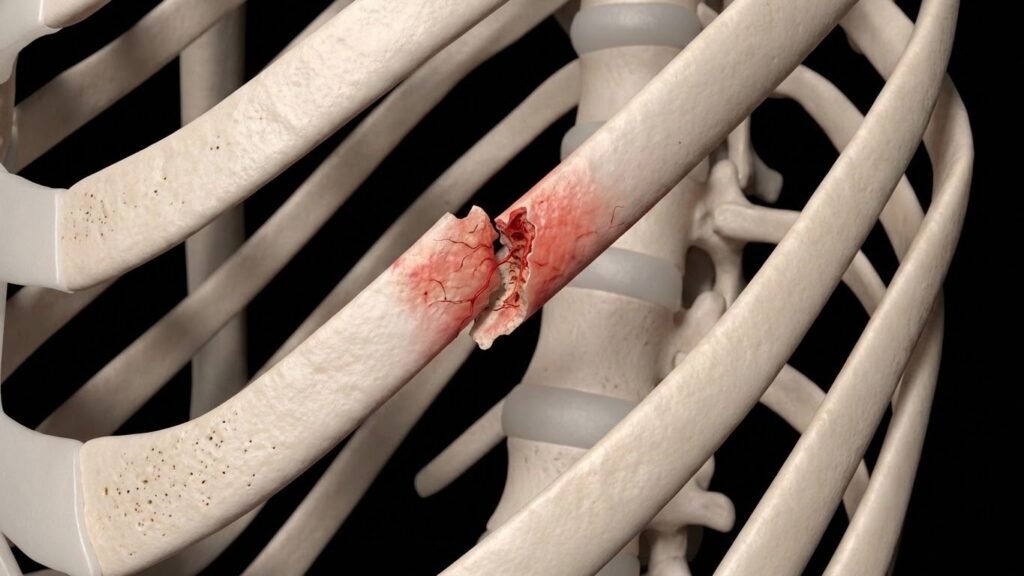
Because this is such a common concern, we wanted to break it down clearly: what a rib fracture actually feels like, the primary causes behind the injury, and precisely when it becomes a medical situation you shouldn’t ignore.
What do rib fracture symptoms actually look like?
Rib fractures are most commonly associated with trauma, but what many people don’t realize is how much they affect everyday functions like breathing. (If you are unsure how your injury happened, you can read more about the different causes of rib fractures in our detailed guide.) The ribs play a key role in expanding the chest during inhalation, so when one is fractured, even small movements can become painful.
The most typical symptom is a sharp, localized pain that worsens when you breathe, cough, or move. Unlike muscle soreness, it doesn’t ,,warm up” or improve with movement, in fact, it often gets worse. A particularly telling sign is what doctors call pleuritic pain, meaning:
- The pain intensifies significantly when you inhale, cough, or sneeze.
- The fractured rib irritates surrounding tissues and reduces normal chest wall movement.
- You may feel pinpoint tenderness in a specific spot or notice that taking a deep breath suddenly becomes difficult (Işıklı et al., 2024; Ozgur et al., 2025).
The hidden risk of recognition
While many rib fractures heal on their own, the symptoms - and especially their effect on breathing - make proper recognition and management essential. In many cases, people instinctively start breathing more shallowly to avoid the pain.
However, rib fractures reduce chest wall stability and respiratory volume, making it harder to take deep breaths and clear airway secretions (Işıklı et al., 2024; Ozgur et al., 2025). This shallow breathing is where the real risk begins, as it can quickly lead to complications like atelectasis, where parts of the lung collapse due to insufficient ventilation (Ozgur et al., 2025; Chrisofix IFU, 2025).
When should you take it seriously?
Because rib fracture symptoms can overlap with bruising or muscle strain, it’s easy to underestimate the injury. However, certain signs should always prompt medical evaluation:
- If the pain is severe or worsens significantly with breathing.
- If the pain is accompanied by shortness of breath.
- If symptoms don't improve after a few days, or if you develop a fever (which may indicate pneumonia).
Understanding the difference between a minor injury and something that requires attention can help prevent complications and speed up recovery. Modern care now focuses on both stabilization and respiratory support - rather than just pain relief - to ensure the best outcome (Ozgur et al., 2025). To see these principles in practice, explore our guide on modern treatment options for rib fractures.